Pest guide · Meridian, Idaho
Yellowjackets and Paper Wasps in Meridian: Water at Parks, Late-Summer Nests, and Sting Risk
- Reviewed by a licensed Idaho pest professional
A wasp nest starts with one queen in spring and may hold a huge workforce by the end of summer. The Pacific Northwest Insect Management Handbook flags August and September as the months when yellowjackets and hornets cause the most trouble, and it estimates that roughly one or two people in a hundred have a severe allergy to yellowjacket venom — enough to make a sting a medical emergency. Nests beside doors, patios, play space, or inside a wall are work for a licensed professional, not something to walk up to.
How a Meridian wasp season usually unfolds
Spring belongs to a lone queen raising her first workers. Those workers then enlarge and guard the nest through the hot months. Late summer is when the colony is at full size; fall is when new queens and males appear. After frost arrives, the workers and males generally die, and only the newly mated queens typically live through winter. The slow wasps on a sunny sill in early spring are often those queens coming out (PNW handbook).
Where Meridian wasps find water, food, and eaves
Hot, dry summers favor yellowjackets and paper wasps. They drink at irrigation boxes, at the ponds in Kleiner Park and Settlers Park, and from pet bowls. They forage around trash enclosures at The Village at Eagle Road and Fairview and along downtown restaurant blocks. Eaves on bungalows and on new two-stories both attract paper-wasp nests. In late summer, yellowjackets grow more aggressive around outdoor meals. A licensed professional can identify the insect and choose a safe approach to the nest.
Yellowjackets, paper wasps, mud daubers, and honey bees
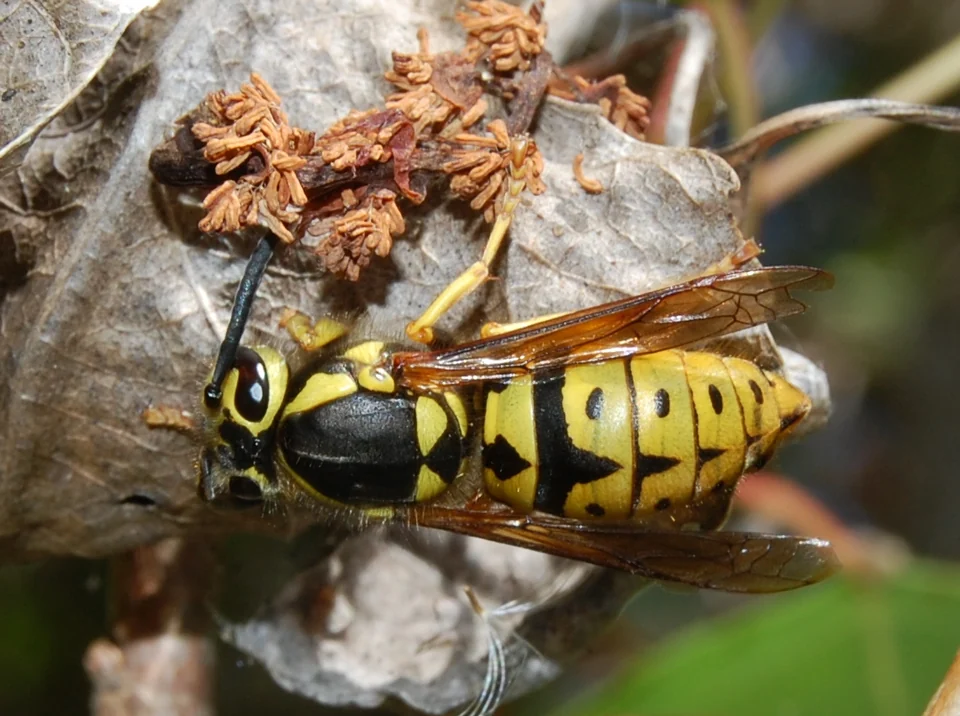
- Yellowjackets and hornets. Stocky wasps marked with black and yellow or white. A nest may be underground, a gray paper globe in the open, or hidden in a wall. Workers hunt other insects and also come to meat, sweets, and, late in the year, rotting fruit (PNW handbook).
- Paper wasps. A slim waist and long legs, with small open combs hanging from a branch or eave. The handbook describes paper wasps and mud daubers as less likely to swarm if you are not at the nest.
- Mud daubers build clay tubes on flat surfaces.
- Honey bees are a different animal. The handbook says a honey bee hive should not be destroyed, and that a local beekeeper may be able to move it. A professional can tell a hive from a wasp nest before anyone acts.
Stings, allergies, and why nests should be left alone
- Allergic reactions. Yellowjacket or bee venom can be life-threatening for people with an allergy. Difficulty breathing, a swollen face or throat, lightheadedness, or a rash that spreads after a sting is a reason to get emergency medical care at once. Anyone who already knows they are allergic should have a plan with their clinician.
- Defending the nest. Workers protect the colony. Kids and pets are the ones most likely to step on a ground nest in the lawn.
- Do not improvise. The handbook warns against pouring gasoline, diesel, or paint thinner into a nest: it is hazardous, environmentally harmful, and against the law. People who need a nest treated are directed to commercial pest control operators.
When a nest should be left to a professional
Request a quote for a nest near a door, patio, play area, or walkway; for activity that suggests a nest in a wall void; or when someone in the household has a known venom allergy. Late summer is the period of greatest risk, when colonies are largest and yellowjackets are most defensive.
How a licensed operator usually treats a nest
- Names the insect. Yellowjackets, paper wasps, mud daubers, and honey bees each need a different plan.
- Finds every nest, including hidden ones in wall voids and below grade.
- Treats when the colony is quieter. The handbook describes evening or nighttime work, when more of the workers are inside, using a product labeled for wasp nests, and applying it from a safer distance.
- Looks at what is drawing wasps — open trash, fallen fruit, outdoor food — and checks eaves where paper wasps come back to build.
Get a free quote from a licensed local provider
Recommended local provider
Quote requests from this guide are passed to a licensed local provider. ProGuard is a local, family and veteran owned company, licensed and insured. Treatments are family and pet safe.
- Local, family and veteran owned
- Licensed and insured
- Family and pet safe
- Free quote
- Serves Meridian, Idaho
Questions about wasps around Meridian yards
Why are yellowjackets worse in August and September?
Colonies grow all summer. By late season they are large, they are producing new queens, and workers are more aggressive around food. The PNW handbook flags those two months as the most troublesome.
Is a paper-wasp nest under the eave as serious as a yellowjacket nest in the ground?
Paper wasps are usually less aggressive away from the nest, but a nest over a door or patio is still a sting risk. A professional can tell the insects apart and decide whether the nest needs to be treated.
What should I do if someone has a severe reaction to a sting?
Get emergency medical care at once for difficulty breathing, a swollen face or throat, lightheadedness, or a rash that spreads. This guide cannot take the place of emergency care.
Can I knock the nest down myself?
Disturbing a nest is the main way people get stung, and improvised treatments such as pouring fuel into a nest are dangerous and illegal. Leave nest treatment to a licensed operator.
Sources
- Pacific Northwest Insect Management Handbook, wasps, hornets, and yellowjackets
- CDC / NIOSH, bees, wasps, and hornets
Citations go to the university, agency or city record behind each fact.
Keep reading
Other pests in Meridian homes
Need help with a pest in Meridian?
Describe what you are seeing and request a free quote. Requests are passed to a licensed local provider.