Pest guide · Meridian, Idaho
Field Crickets Moving Into Meridian Garages When Irrigation Slows in Fall
- Reviewed by a licensed Idaho pest professional
The cricket in a Meridian garage in September or October is usually a field cricket that has been living in the yard all summer. As nights cool and irrigation laterals wind down, those crickets look for warmer, tighter spaces — garage gaps, door thresholds, and foundation cracks. They are a nuisance more than a danger. A licensed professional can find how they are getting in and reduce the numbers around the building, especially when the same garage fills up every fall.
Why fall, laterals, and new landscaping push crickets indoors
Meridian yards stay green through a dry summer because of laterals managed by the Nampa-Meridian and Settlers Irrigation Districts, and because many new subdivisions use pressurized urban irrigation. That watered turf and the weedy edges of easements support field crickets until the season ends — often in early October. When the water stops and nights drop, crickets move toward foundations and lights. New subdivisions on former farmland, with fresh sod and still-settling slabs, see this especially clearly. Older downtown bungalows offer different gaps around original doors and crawl-space vents, but the seasonal trigger is the same.
What a field cricket looks and sounds like
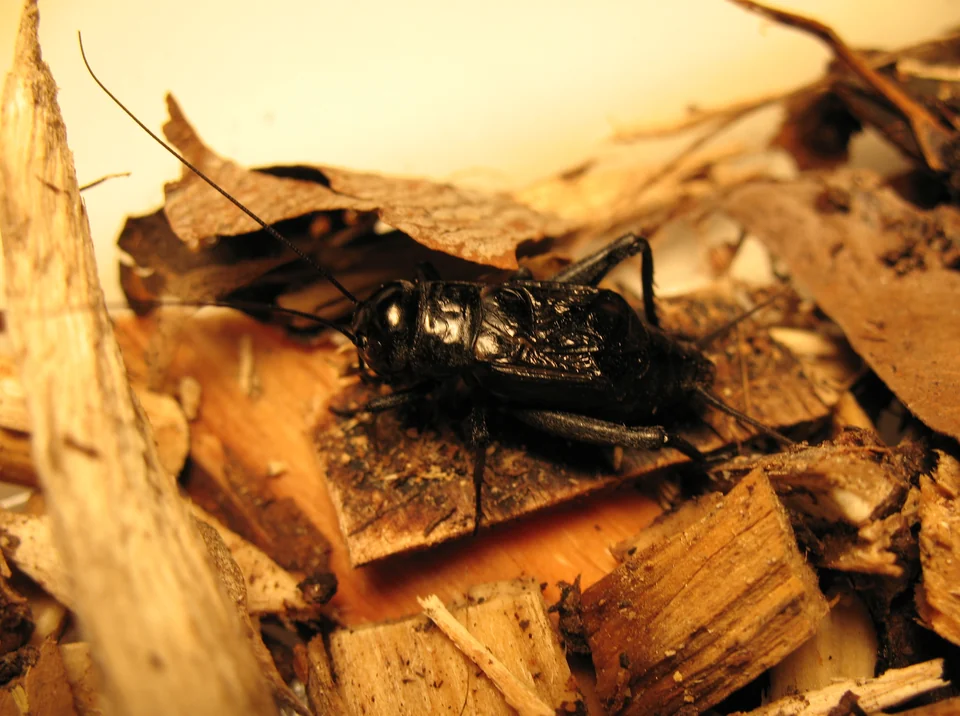
- Appearance. Field crickets are typically dark brown to black, with long antennae and hind legs built for jumping.
- The chirp. Males sing from hidden spots in garages, crawl spaces, and along foundations. The sound is usually how people first notice them.
- Where they hide. They favor cracks, stored boxes, and the gap under a garage door, and they are drawn to lights at night.
- Mostly a nuisance. They do not infest food the way pantry insects do. In large numbers they can occasionally nick fabric or paper, but the usual complaint is noise and the surprise of dozens on a garage floor.
The Pacific Northwest Insect Management Handbook treats field crickets as occasional invaders that move indoors in late summer and fall (PNW handbook).
When a fall cricket problem is worth a professional visit
Request a quote if crickets fill a garage or basement every fall, if they are getting into living rooms, or if you cannot tell how they are entering. A one-time stray cricket is common and usually not a reason to schedule work. A recurring wave after irrigation shuts off is a different pattern.
How professionals usually reduce a cricket invasion
- Confirms the insect, so field crickets are not confused with other fall invaders.
- Finds entry points at garage doors, thresholds, utility penetrations, and foundation cracks.
- Treats the perimeter and harborage where crickets gather as irrigation winds down, and discusses lighting and vegetation against the foundation that make the building more attractive.
- Times the work to the season. Late-summer and early-fall visits, before the main indoor movement, are often more useful than waiting until the garage is already full.
Get a free quote from a licensed local provider
Recommended local provider
Quote requests from this guide are passed to a licensed local provider. ProGuard is a local, family and veteran owned company, licensed and insured. Treatments are family and pet safe.
- Local, family and veteran owned
- Licensed and insured
- Family and pet safe
- Free quote
- Serves Meridian, Idaho
Questions about crickets in Meridian garages
Why do they show up when the irrigation season ends?
Field crickets spend the summer in watered turf and easement weeds. When laterals shut down and nights cool, foundations and garages become the remaining warm, slightly damp shelter.
Are they coming from the canal behind my house?
They live in the grassy, irrigated landscape along laterals and in yards, not only in the water itself. A lateral or easement can still be part of the path they travel as the season ends.
Will they damage my house?
Field crickets are mainly a nuisance. They are not a structural pest. Large numbers can occasionally damage fabric or paper, which is one reason a heavy indoor invasion is worth addressing.
Is a single cricket in October a problem?
A stray cricket is common in fall and usually not a reason to schedule a visit. Recurring numbers in the same garage or room are the better signal.
Sources
- Pacific Northwest Insect Management Handbook
- Nampa-Meridian Irrigation District
- Settlers Irrigation District
- University of Idaho Extension
Citations go to the university, agency or city record behind each fact.
Keep reading
Other pests in Meridian homes
Need help with a pest in Meridian?
Describe what you are seeing and request a free quote. Requests are passed to a licensed local provider.