Pest guide · Meridian, Idaho
Fleas in Meridian Lawns and Ticks on Valley-Floor Trails
- Reviewed by a licensed Idaho pest professional
Fleas and ticks both feed on blood, but they live in different places and need different responses. Fleas hitch rides on pets and wildlife and then breed in carpets, bedding, and shaded yard soil. Ticks wait on vegetation and attach to people and animals in the warm months, mostly May through September in Idaho. Both can carry disease, so bites deserve attention, and a veterinarian should guide any treatment for a pet.
How fleas establish themselves in a Meridian house
Adult fleas are external parasites of warm-blooded animals. Their bites often cause swelling and prolonged itching. The Pacific Northwest Insect Management Handbook describes fleas as nest parasites: eggs are laid and larvae develop in the animal’s nest or bedding, and the larvae feed on hair, shed skin, and dried blood rather than on blood itself. Fleas may also transmit tapeworms (PNW handbook).
Pupa can wait a long time for a warm-blooded host, which is why a house that has sat empty can still produce a burst of fleas when people or pets return. That pattern shows up after a vacancy, or when a previous pet left eggs and larvae behind in carpets and furniture.
Ticks you may encounter in Idaho, and what they can carry
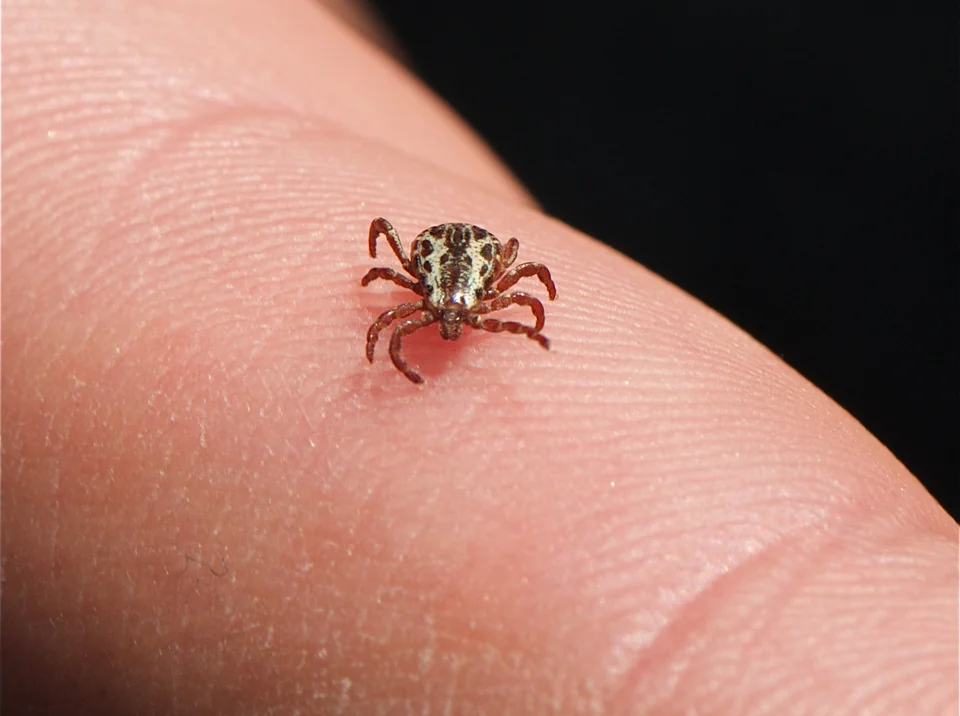
Ticks are wingless, blood-feeding parasites, usually about 0.2 inch long or smaller, related to spiders. They do not jump, fall, or fly onto a host. They wait on vegetation — a behavior called questing — and cling to whatever passes by. An Ag Proud overview of Idaho ticks lists the American dog tick, the Rocky Mountain wood tick, the western blacklegged tick, and the brown dog tick as the species most often found in the state, with most bites occurring from May until September (Ag Proud).
The Idaho Department of Health and Welfare says public health officials here are most concerned about Rocky Mountain spotted fever, tick-borne relapsing fever, and tularemia from ticks (DHW). The CDC notes that Colorado tick fever, a rare virus, is spread by the Rocky Mountain wood tick in the western United States (CDC). Idaho does not test submitted ticks for disease-causing microbes, according to DHW, so a symptomatic bite is a reason to see a medical provider rather than wait on a tick test.
Where Meridian yards and trail edges actually put people at risk
Irrigation that keeps lawns and shaded soil damp also helps flea larvae develop close to houses, especially in established neighborhoods and around parks. Ticks are picked up in taller grass, ditch banks, leftover open lots, and trail margins — including paths around Kleiner Park and Settlers Park — on the valley floor, not from a foothill sage community Meridian does not have. If a pet is involved, start with a veterinarian; a licensed pest professional can address the yard and interior once fleas are established in the house.
What to do after a bite, in health agencies’ terms
The Idaho Department of Health and Welfare recommends checking for ticks after time outdoors and asking a veterinarian about prevention products for pets. See a medical provider promptly if symptoms develop after a tick bite. DHW notes that most of these diseases cause fever and some a rash, and that early treatment reduces the risk of complications. Flea bites cause itching and swelling; fleas may also transmit tapeworms and other diseases. This guide is general information, not medical or veterinary advice.
When fleas or ticks are a reason to request a quote
Request a quote when fleas keep appearing in carpets or furniture after a pet has been treated, when a vacant house produces a burst of fleas, or when yard and interior activity suggests the infestation is no longer limited to one animal. Tick concerns after time on a trail start with a medical or veterinary visit; a pest professional can help when the yard itself needs attention.
How professionals usually divide flea work from tick work
- Coordinates with a veterinarian when a pet is part of a flea problem, because animal treatment and premises treatment have to work together.
- Inspects bedding, carpets, furniture, and shaded yard soil for flea life stages, including pupae that can wait out a vacancy.
- Treats the premises with products labeled for fleas, often in more than one visit, because eggs and pupae do not all emerge at once.
- For ticks, looks at tall grass, ditch banks, and trail-edge vegetation around the property and discusses yard conditions that make questing ticks more likely. A professional does not replace a medical evaluation after a bite.
Get a free quote from a licensed local provider
Recommended local provider
Quote requests from this guide are passed to a licensed local provider. ProGuard is a local, family and veteran owned company, licensed and insured. Treatments are family and pet safe.
- Local, family and veteran owned
- Licensed and insured
- Family and pet safe
- Free quote
- Serves Meridian, Idaho
Questions about fleas and ticks in Ada County
Do I need the foothills to pick up a tick in Meridian?
No. Ticks quest in taller grass, ditch banks, leftover lots, and park trail margins on the valley floor. Kleiner Park and Settlers Park edges are more relevant here than a sage hillside.
Why did fleas explode when we moved into an empty house?
Flea pupae can wait a long time for a host. When people or pets return, those pupae emerge together. That is a known pattern in vacant premises, not a sign that the house was necessarily dirty.
Which tick diseases worry Idaho health officials?
The Idaho Department of Health and Welfare is most concerned about Rocky Mountain spotted fever, tick-borne relapsing fever, and tularemia. The CDC also notes Colorado tick fever in the western United States. Fever or a rash after a bite is a reason to see a medical provider.
Can a pest company treat my dog?
Pet treatment belongs with a veterinarian. A licensed pest professional can treat the house and yard once fleas are established off the animal.
Sources
- Idaho Department of Health and Welfare, ticks and tick-borne diseases
- CDC, Colorado tick fever
- Pacific Northwest Insect Management Handbook, fleas
- Central District Health
Citations go to the university, agency or city record behind each fact.
Keep reading
Other pests in Meridian homes
Need help with a pest in Meridian?
Describe what you are seeing and request a free quote. Requests are passed to a licensed local provider.