Local guide · Meridian, Idaho
Meridian, Idaho Neighborhoods and the Pests Each Area Tends to See
- Reviewed by a licensed Idaho pest professional
Short answer: Pests in Meridian follow the ground more than the ZIP code. Older brick buildings and bungalows downtown, irrigation laterals that still cut through mid-city lots, the landscaped commercial core at The Village and Kleiner Park, and new subdivisions on former farmland each favor a slightly different mix. The basics — food, water, harborage — do not change.
The five areas on this page
- Downtown and City Center Historic brick buildings, bungalows, Meridian Speedway, City Hall, mature trees.
- The Village and Kleiner Park Eagle Road and Fairview, ponds, heavy landscaping, restaurants.
- Settlers Park and mid-city Ustick and Meridian Road, established yards, irrigation laterals.
- North Meridian Chinden and Linder, rapid new growth on the north side of the city.
- West and south Meridian Ten Mile, Franklin, Overland and Lake Hazel, new housing and commercial corridors.
How to read this page
Every area below is a real part of Meridian, described from the city’s own parks and history materials, Census figures, and published local reporting. Neighborhood names are used as geography, not as a promise that a given pest is limited to one subdivision. If you want help, use the same checklist on choosing a company anywhere in the city.
Area 1 of 5
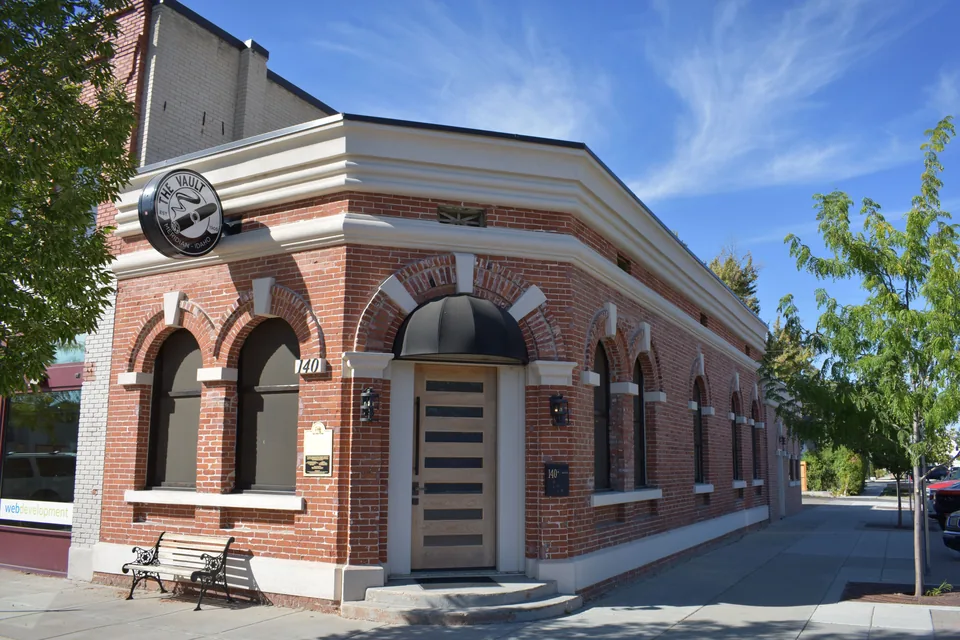
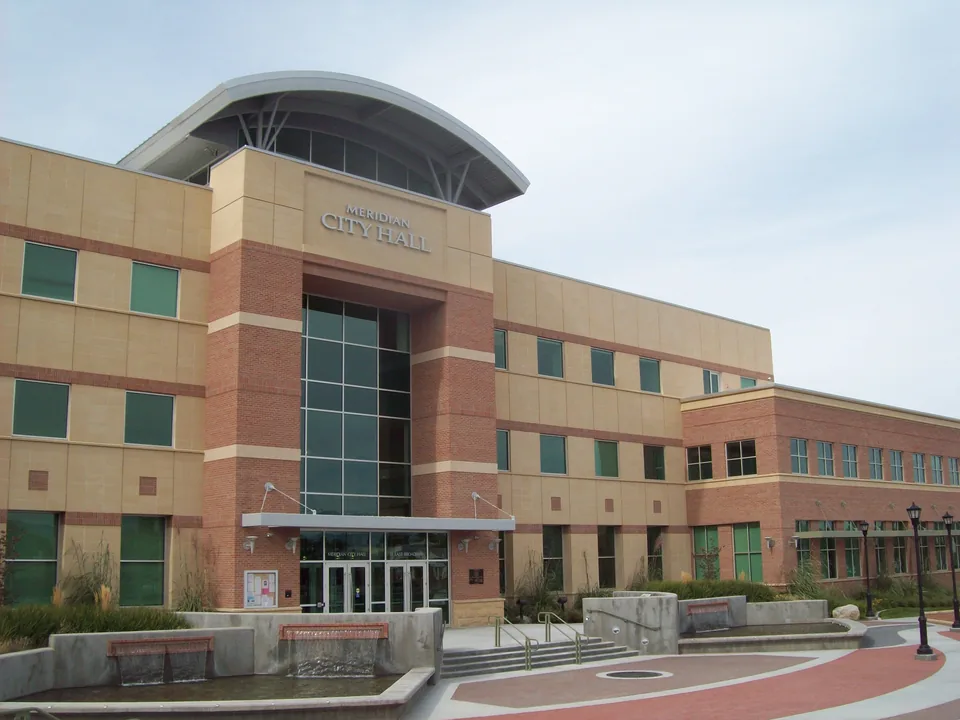
Downtown and City Center
What it is. Meridian’s City Center still shows the farm-and-rail town it grew from: early-1900s brick commercial buildings, bungalows, the yellow water tower, and Meridian Speedway, a quarter-mile oval that opened in 1951. Meridian City Hall, opened in 2008, sits on Broadway. The Meridian Historic Walking Tour includes landmarks such as the 1912 Bank of Meridian and the 1913 Idaho Building. Mature street trees and older foundations are the rule, not the exception.
What you tend to see. Mice in wall voids and stored goods; pantry pests in older apartments and shops; spiders in sheds, meters and garages; cluster flies in south-facing upper rooms in fall; and wasps at eaves and around downtown restaurants. Rats can use alleys, trash enclosures and the same laterals that once served the original town site.
Area 2 of 5
The Village and Kleiner Park
What it is. The Village at Meridian opened in the fall of 2013 on the northeast corner of Eagle Road and Fairview Avenue, an intersection that local reporting has described as among the busiest in Idaho. Immediately behind it, Julius M. Kleiner Memorial Park is a 58-acre city park established in 2012 on land the Kleiner family had farmed. The park has more than three miles of paths, fishing ponds, a bandshell and heavy year-round use. This is irrigated, public, highly landscaped ground next to a large restaurant and retail district — not a quiet residential cul-de-sac.
What you tend to see. Flies and wasps around food service and trash enclosures; moisture pests along ponds, turf and planting beds; and rodents where commercial food waste and irrigation meet fence lines. Homes just off this corridor share those conditions at the edges.
Area 3 of 5
Settlers Park and mid-city Meridian
What it is. Around Ustick Road and Meridian Road, mid-city Meridian is more established: larger trees, older irrigation laterals, and Settlers Park, one of the city’s major family parks, with sports fields, a splash pad and broad irrigated turf. This is not the brand-new edge of town, and it is not downtown. Yards have had time to grow dense landscape, and the Settlers and Nampa-Meridian systems still run through the area.
What you tend to see. Boxelder bugs in the fall on south and west walls; millipedes and pill bugs after heavy irrigation; trailing ants along slab edges; and occasional mice using utility and lateral easements. Spiders are common in garages and sheds with stored goods.
Area 4 of 5
North Meridian, along Chinden and Linder
What it is. North Meridian, toward Chinden Boulevard and Linder Road, has been one of the city’s fastest-growing edges. Former agricultural ground has turned into new streets, new schools and new landscape beds in a short span of years. You can see the foothills in the distance, but this is still the irrigated valley floor, not a foothill community. Construction, open lots and brand-new slabs are the story.
What you tend to see. Mice displaced by construction; crickets around lights and garage doors in late summer; wasps at new eaves; and rats along leftover fence lines, laterals and the edges of still-open ground. New landscaping can also bring a first-year burst of moisture pests when irrigation is heavy and mulch is deep.
Area 5 of 5
West and south Meridian
What it is. South Meridian along Franklin, Overland and Lake Hazel includes St. Luke’s Meridian Medical Center (opened in 2001 near Eagle Road and Franklin), nearby employment campuses, and a wide band of housing that filled in as the city grew south. It is a mix of commercial corridors and subdivisions of different ages, still crossed by laterals and still close, in places, to leftover agricultural ground.
What you tend to see. Rodents along commercial edges and laterals; wasps and flies around busy corridors; ants and occasional pantry pests in both older and newer kitchens; and moisture pests where irrigation and dense planting run up to the foundation.
West of downtown, the Ten Mile corridor adds a mix of newer housing and office-and-housing development, including Ten Mile Crossing. Like the south side, much of this ground was farmed within living memory, and irrigation infrastructure is still part of the neighborhood.
The common thread
Why neighborhood matters, and what does not
Local conditions shape which pests you see, but the basics are the same everywhere in Meridian: food, water and a place to hide. A downtown bungalow and a new house on former farmland can share mice and trailing ants. What changes is the most likely source — an old tree-to-roof connection, a lateral behind the fence, or a construction gap at the slab. Use this page to ask better questions, not to rule a pest out.
Get help
Local service in Meridian, Idaho
Recommended local provider
This is a general guide for Meridian, Idaho. Quote requests are passed to a licensed local provider. ProGuard is a local, family and veteran owned company, licensed and insured. Treatments are family and pet safe.
- Local, family and veteran owned
- Licensed and insured
- Family and pet safe
- Free quote
- Serves Meridian, Idaho
Free, no obligation
Get a free quote
Describe what you are seeing and request a free quote. Requests are passed to a licensed local provider.
Your request is shared with a licensed local provider, so they can reply. This guide does not sell your information. Disclosure
Common questions
Neighborhood questions
Does my Meridian neighborhood change what pests I will see?
Yes, mostly through conditions: how close you are to an irrigation lateral, whether the house is a century-old bungalow or a new slab, whether restaurants and trash enclosures sit nearby, and whether construction or leftover farmland is still at the edge of the block. It does not mean a pest is impossible in another part of the city.
Do newer subdivisions get fewer pests?
No. New streets on former farmland often see mice, crickets and wasps first, and trailing ants once kitchens and irrigation are in regular use. A new house is not a pest-free house. It is a different set of gaps and a different landscape.
Is downtown different from the rest of Meridian?
Downtown's older brick buildings, trees and alleys favor mice, pantry pests, cluster flies and spiders in ways a new subdivision usually does not, at least not in the first years. The irrigation laterals and the growing commercial core still connect those areas to the rest of the city.
Sources
- U.S. Census Bureau, 2020 Census; Vintage 2024 population estimates for Meridian city, Idaho.
- City of Meridian, Julius M. Kleiner Memorial Park; city history materials on irrigation and the town site.
- BoiseDev, “Then and now: See how Meridian has grown & changed over past 30 years” (June 2024), on Eagle Road and Fairview, The Village (2013) and Kleiner Park (2012).
- Meridian Historic Walking Tour landmarks, including the Bank of Meridian (1912) and the Idaho Building (1913).
- Nampa-Meridian and Settlers irrigation districts, which still serve the Meridian area.
Need help with a pest in Meridian?
Describe what you are seeing and request a free quote. Requests are passed to a licensed local provider.
Does my Meridian neighborhood change what pests I will see?
Yes, mostly through conditions: how close you are to an irrigation lateral, whether the house is a century-old bungalow or a new slab, whether restaurants and trash enclosures sit nearby, and whether construction or leftover farmland is still at the edge of the block. It does not mean a pest is impossible in another part of the city.
Do newer subdivisions get fewer pests?
No. New streets on former farmland often see mice, crickets and wasps first, and trailing ants once kitchens and irrigation are in regular use. A new house is not a pest-free house. It is a different set of gaps and a different landscape.
Is downtown different from the rest of Meridian?
Downtown's older brick buildings, trees and alleys favor mice, pantry pests, cluster flies and spiders in ways a new subdivision usually does not, at least not in the first years. The irrigation laterals and the growing commercial core still connect those areas to the rest of the city.